
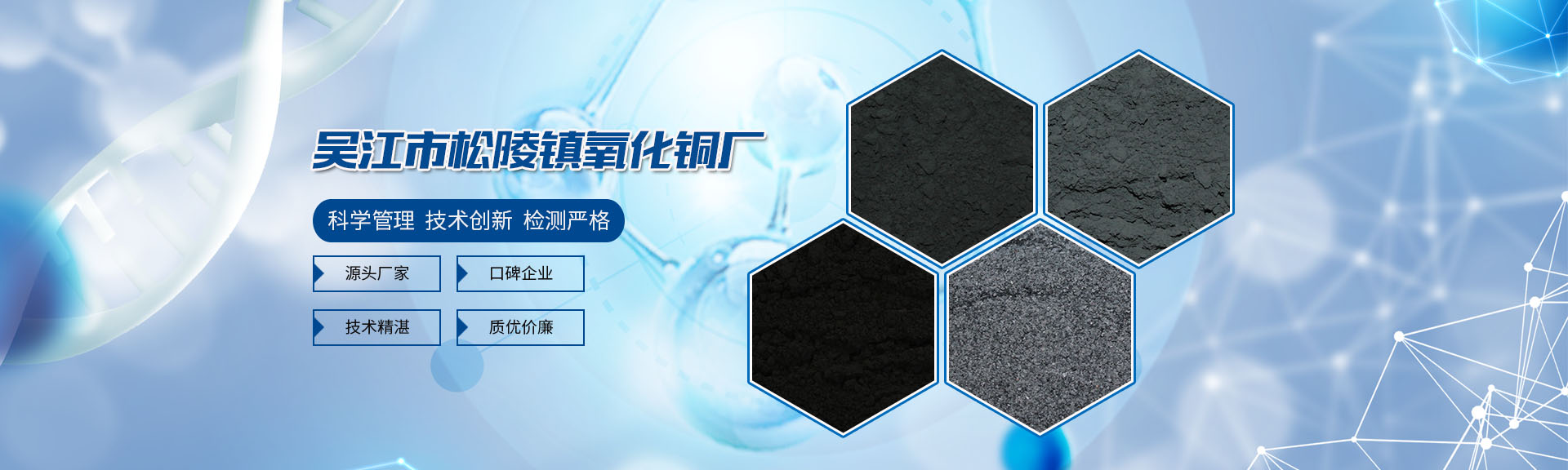
In the development of modern industry, environmental protection issues are increasingly valued, and copper oxide, as an important industrial material, its environmental advantages are gradually recognized by people. Have you ever thought about how much this seemingly ordinary industrial copper oxide can actually contribute to environmental protection? Next, let's delve into the environmental advantages of industrial copper oxide.
Basic characteristics of copper oxide
Firstly, let's learn about industrial copper oxide. It is an inorganic compound mainly composed of copper and oxygen elements. With the continuous advancement of industrial technology, the application field of copper oxide has expanded from the traditional metallurgical industry to multiple industries such as electronics, ceramics, coatings, etc. You may wonder, what is the relationship between copper oxide and environmental protection? The answer lies in its relatively low environmental burden during production and use.
Environmental advantages in the production process
In the process of producing industrial copper oxide, many traditional chemical reactions often release large amounts of harmful gases and wastewater, while modern copper oxide production technology has achieved effective management and utilization of waste. For example, many companies are now adopting a circular economy model to produce copper oxide from waste materials, which not only reduces resource waste but also lowers environmental pollution. Imagine how beautiful the world would be if every industry could do this!
Application areas and their environmental benefits
The application of industrial copper oxide is not limited to traditional fields, and its performance in environmental protection is equally amazing. In the paint industry, copper oxide, as an environmentally friendly pigment, can effectively resist ultraviolet radiation and oxidation, extending the service life of coatings. In this way, not only does it reduce the frequency of coating use, but it also reduces the waste generated by frequent heavy coating. More importantly, copper oxide itself does not contain harmful heavy metals, and its impact on the environment can be said to be minimal.
In the electronics industry, conductive materials made of copper oxide can reduce the burden on the environment while maintaining good conductivity. Compared with other metal materials, the resource acquisition process of copper oxide is more environmentally friendly. This change allows us to enjoy technological convenience while also taking on more responsibility for the future of the earth.
Regeneration and utilization of copper oxide
When it comes to environmental protection, the effectiveness cannot ignore the value of recycling. Industrial copper oxide can be recycled and reused after its lifecycle ends. Many companies have started researching how to convert discarded copper oxide into new products. This closed-loop economic model can not only effectively reduce resource consumption, but also lower the impact on the environment. Have you ever thought that future industrial production will rely entirely on this recycling model?
Future Prospects
With the continuous improvement of people's environmental awareness, the market demand for industrial copper oxide will also continue to grow. We can foresee that the future industry will develop towards a more environmentally friendly and sustainable direction. Copper oxide, as a high-quality environmentally friendly material, has the potential to be further explored and become an important force in promoting the green industrial revolution.